Q&A  Podchaser Q&A Trent Anderson, Head of Growth & Strategy, Podchaser Podchaser is often called the IMDb of podcasts. For publicists and talent agencies, what makes your database different from searching Apple or Spotify? Trent: Apple and Spotify are listening platforms. They're built to help consumers find something to listen to — not to help a publicist build a media plan. When you search Apple Podcasts, you get a title, a description, and a star rating. You have no idea how many people actually listen, who those listeners are, whether the show books outside guests, or how to reach the producer. Podchaser Pro gives you the intelligence layer that sits underneath all of that. For any of our 6M+ podcasts, you can see estimated listenership, 20+ audience demographic datapoints — age, income, occupation, interests — verified contacts broken out by role (host, producer, talent booker, network rep), brand safety scores, and 32 million creator credits that map who has appeared on what. It's the difference between browsing a bookstore and having access to the publisher's sales data, readership demographics, and the editor's direct line. How robust is the Podchaser database today — can you share exactly what you're tracking across podcasts? Trent: We index every podcast that has ever published an RSS feed — over 6 million shows. For those shows, here's what members get access to: - Listenership estimates — monthly and per-episode, derived from first-party data. Not what the host claims. What we can verify.
- Audience demographics — 20+ datapoints including age, gender, household income, occupation, location, interests, and brand affinities.
- Verified contacts — 2M+ validated contacts with role-specific breakdowns: host, producer, executive producer, talent booker, advertising/sponsorship rep.
- Creator credits — 32M+ credits mapping guests, hosts, and producers across shows. Think of it as a casting database for the podcast ecosystem.
- Transcript search — keyword search across episode transcripts, so you can find every time a talent name, show title, or brand was mentioned in conversation.
- Brand safety and political skew — content risk flags and political lean data, so you can vet a show before your client's name is attached to it.
- Sponsor intelligence — who's advertising on which shows, estimated spend, sponsorship history.
- AI-powered vetting — our "Tell Me Why" tool generates instant fit scores and custom pitch templates for any show, tailored to your specific campaign.
It's the most comprehensive podcast intelligence platform in the market, built specifically for the people doing the research and outreach — not the people pressing play. 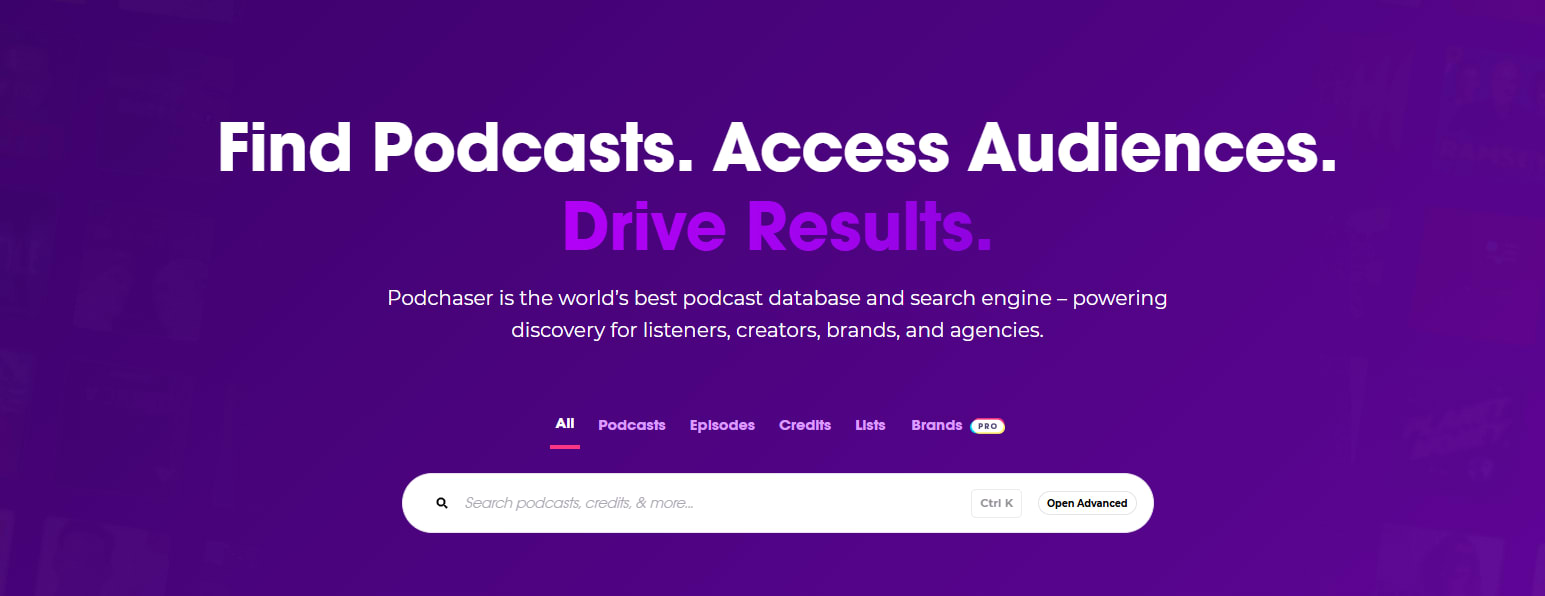 When a publicist is launching a show, film, or book, how can your data help them identify the right podcasts? Trent: A launch campaign lives and dies on timing and targeting. You have a narrow window to generate maximum coverage, which means you can't afford to waste pitches on shows that look relevant but aren't. Here's the typical workflow in Podchaser Pro: Start with our 25+ advanced search filters to narrow from 6 million shows to a working shortlist — filtering by topic, audience demographics, listenership range, whether the show actively books guests, and whether it's still publishing. Then use our audience data to verify each show's listeners actually match the audience you're trying to reach for the launch. From there, you pull verified contacts — the talent booker or producer, not just a generic inbox — and export everything into a campaign-ready list. Our AI tool can even generate pitch angles tailored to each show based on the launch angle and the show's editorial history. For book publicists specifically — we work with 72 publishers — you're pitching 50–100 shows in a two-week window around pub date, which means the research has to be fast and the targeting has to be precise. How does Podchaser help PR agencies deliver stronger reporting to their clients? Trent: The dirty secret of podcast PR reporting is that most agencies report a list of show names and call it a day. The client has no idea whether those placements actually reached anyone meaningful. Podchaser Pro gives agencies the data to build reports that justify retainers. For every placement, you can report: estimated per-episode reach from a third-party source (not the host's self-reported numbers), audience demographic breakdown, and brand safety context. The agencies that show leadership a number — total quarterly reach, audience breakdown, quality of placement — are the ones that get their podcast PR budgets renewed. The ones that show a list of show names don't. On the network and studio side, how can your tools help them provide meaningful podcast performance data back to TV & Film producers, talent, and internal teams? Trent: Studios and networks have a podcast measurement problem. When a show's star does a press tour that includes 15 podcast appearances, the internal team usually gets a spreadsheet with show names and air dates — and that's it. Nobody can tell the producer how many people actually heard those appearances, who those people were, or which placements drove the most value. Podchaser Pro closes that gap. For every podcast appearance, you can pull estimated reach, audience demographics, and coverage context — then roll it into a report that tells the producer or talent manager: "Your star reached an estimated 2.3 million podcast listeners this quarter, primarily 25–44 year-olds in the US, across 15 shows in the entertainment, culture, and comedy categories." For networks managing multiple titles and talent simultaneously, the monitoring tools let you track mentions across the full podcast landscape in near-real-time — so when a show starts generating organic podcast buzz, you see it as it happens, not in a quarterly review. 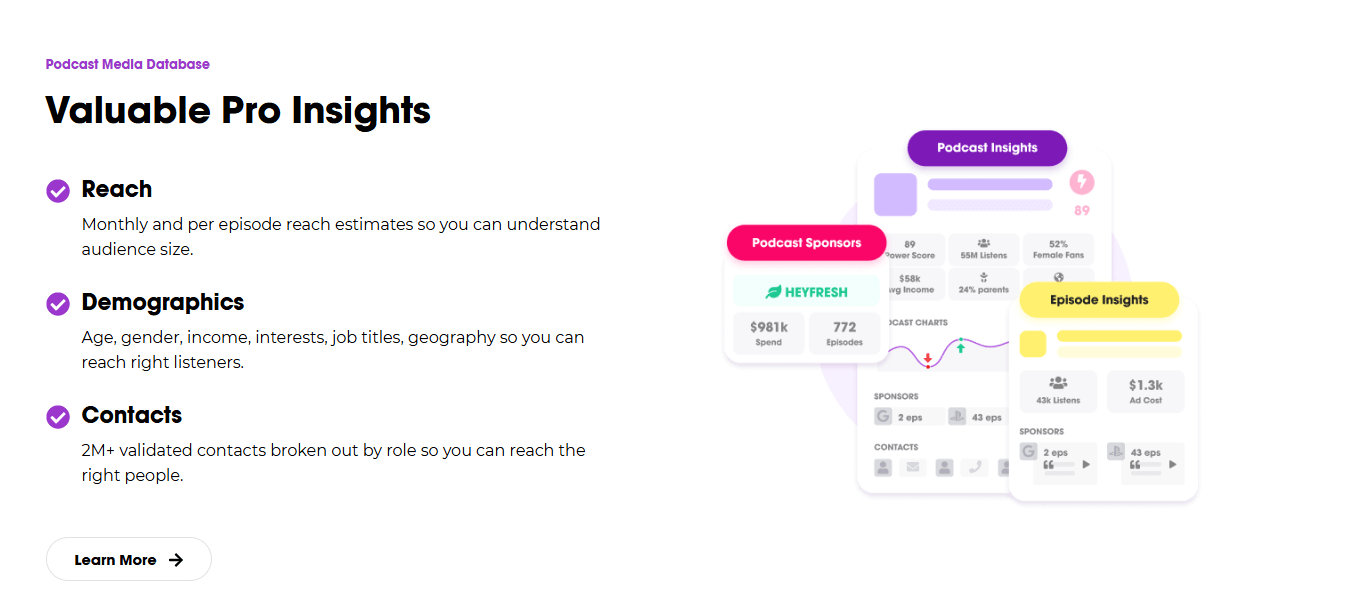 Podcast coverage often goes untracked compared to traditional press. How are top studios and streamers using monitoring and alerts to capture that value? Trent: Most studios have sophisticated media monitoring for print, broadcast, and online coverage. They know within hours when a publication runs a story. But for podcasts — a medium reaching 546 million people globally — they're flying blind. A show's title character can be discussed at length in a podcast episode, and unless someone on the team happened to listen, nobody at the studio knows it happened. The episode title might be "Our Favorite Moments of 2026" — there's no indication from metadata alone that your property was featured for 20 minutes. That's why transcript-level monitoring changes the game. Netflix and Disney's streaming entertainment division use Podchaser Pro to track mentions of their shows, actors, and characters across episode transcripts — not just titles and descriptions. The result is that podcast coverage stops being an unmeasured afterthought and starts being a reported media channel with real numbers attached. How powerful is transcript-level search for tracking talent mentions, character names, or brand integrations during a campaign? Trent: It's the single most underutilized capability in entertainment PR right now. Most podcast monitoring tools only search episode titles and descriptions. That means they catch an episode titled "Interview with [Actor Name]" but miss the episode where that actor, their character, or their new project was discussed for 15 minutes under a completely unrelated title. Our transcript search indexes the actual words spoken in episodes across thousands of podcasts. You can search for a talent name, a character name, a film title, a catchphrase — anything that was actually said on air. And for each mention, you can see the context, the reach, and the sentiment. During a campaign, that means you can track in near-real-time how the conversation is evolving across the podcast landscape — intelligence you can act on mid-campaign, not just a report you file after it's over. For media outlets and podcast creators — how can they ensure they're properly listed and credited in the database? Trent: The simplest thing: make sure your show has a valid RSS feed. We index every podcast with a published RSS feed automatically, so if your show is distributed through any major hosting platform, you're almost certainly already in the database. To verify, search for your show at podchaser.com. If it's there, you can claim your page and update your details. The more complete your profile, the more discoverable you are to the 540+ PR teams, agencies, publishers, and brands using Podchaser Pro to find podcast opportunities. Think of it as your podcast IMDb page — you want it accurate. Looking ahead two to three years, how do you see podcast intelligence evolving — and what should publicists, studios, and creators be preparing for now? Trent: Three shifts I think will define the next few years: AI is going to be the interface. Right now, podcast research means a human searching a database, building a spreadsheet, and making judgment calls. Within two years, that workflow will be: tell an AI agent "find me the 20 best podcasts to pitch for this book launch, verify the audiences, draft the pitches, and send them." The intelligence layer — the data — still has to exist. But how people interact with it is about to change dramatically. We're already building toward this. Measurement will become non-negotiable. The era of podcast PR existing as an unmeasured channel is ending. Clients, studios, and leadership teams are going to expect the same level of reporting from podcast coverage that they expect from every other media channel. The teams that can quantify reach, audience quality, and sentiment will dominate. The podcast landscape is going to get more competitive, not less. More shows means more noise. More publicists are discovering podcast PR, which means response rates will decline over time. The teams that invest in data-driven targeting now will have a compounding advantage. My advice: treat podcast intelligence as infrastructure, not as an experiment. The teams building it now will own the channel. The ones waiting will be catching up. | 
